

Tag

criminal justice

Browsing

2019.11.16 18:18:00
A brutal discovery in January 1990 of a female victim near the Nakdong River led to arrests almost two years later when two men, described by a witness as a “big man and a small man,” were brought in, confessed, and were ultimately sentenced to life imprisonment. After serving 21 years and being released in 2013 through special commutation, the two men have consistently maintained their innocence, alleging that their confessions were coerced through police torture. They filed for a retrial in 2017, and the case has resurfaced in public attention as it reaches its latest legal turning point nearly three decades after the crime.

The retrial process reached an unusual intensity: the Busan High Court held its seventh and final hearing on November 14 to decide whether to open a full retrial—a procedural rarity for an ordinary criminal case. Former investigators named by the defendants largely testified that they did not recall the case or denied using torture, while a prosecutor from the government’s past-investigation unit testified about the review that found evidence suggesting the defendants’ confessions were obtained by physical coercion. The Ministry-linked past-investigation committee concluded that police abuse likely produced false confessions, but its findings do not carry the same legal weight as court verdicts, and some factual gaps remain contested in court.

At the hearing the prosecution urged caution, stressing that allowing retrials too readily could undermine finality in criminal law and arguing that the past-review body’s conclusions have limited evidentiary force. Defense counsel and independent journalists and experts countered that extensive new evidence, forensic reviews, and expert analyses justify reopening the case and demanded that the court correct a possible historic miscarriage of justice. With the court now weighing witness testimony, investigatory reports, and competing legal standards, its imminent ruling will carry major implications for accountability in past police investigations and the standards for overturning long-settled convictions in South Korea.


Original source: [낙동강변 2인조 살인사건-20] 스물여덟 번째 11월 (Source: the news outlet; please refer to the original article.)

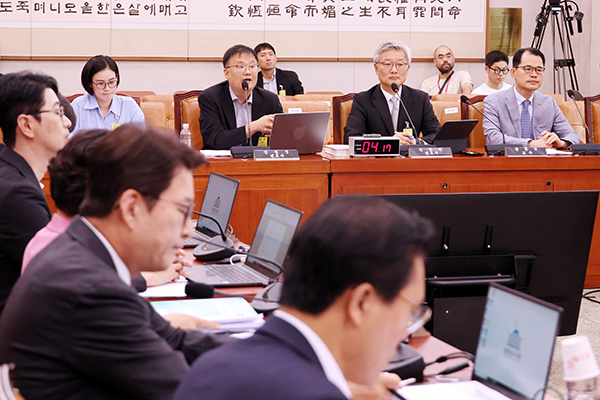
On April 26–27, lawyer Kim Yewon of the Center for the Human Rights of Persons with Disabilities publicly criticized the 검수완박 (complete removal of prosecutors’ investigative powers) bill passed by a National Assembly subcommittee. She flagged a clause limiting prosecutors to investigating only facts “within the same scope” as those transferred from police, calling it a “fatal poison clause,” and urged lawmakers to remove that restriction at least for prosecutors’ supplementary investigations.

Using 20 concrete examples, Kim illustrated how the identicality restriction would block investigations that develop beyond the original charge: a child-abuse probe that uncovers sexual crimes; a stalker’s phone revealing child sexual exploitation material; small fraud cases that reveal hundreds of victims or a far larger Ponzi scheme; identifying ringleaders while investigating low-level money collectors; confessions or evidence of additional thefts, murders or bribery uncovered during unrelated probes; and cases where criminal leads point to espionage, cross-border technology leakage, or organized drug manufacture and distribution. She warned these limits would prevent prosecutors from following logical investigative leads even when public safety or national security is at stake.

Kim’s examples underline a broader concern that the proposed law could create investigative gaps, impede accountability, and complicate responses to evolving criminal networks. Her plea frames the restriction not as a technicality but as a substantive risk to effective law enforcement, pressing lawmakers to amend the bill to preserve prosecutors’ ability to pursue related or newly revealed offenses during supplementary investigations.


Original source: 검수완박 되면 못하는 20가지…”아동학대 수사 중 성폭력 확인돼도 수사 불가” (Source: the news outlet; please refer to the original article.)
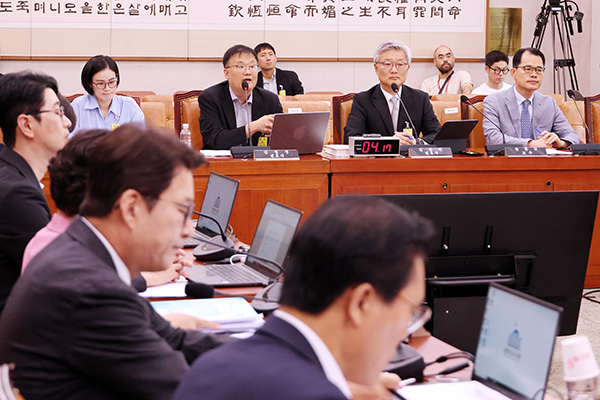
Lawmakers and legal experts convened at a National Assembly Judiciary Committee public hearing to review the Democratic Party’s so‑called “prosecutorial reform 4 laws” — abolishing the Prosecutor’s Office, creating a Public Prosecution Office, establishing a Serious Crimes Investigation Office, and founding a National Investigation Commission. While participants broadly agreed that prosecutorial reform is necessary, the hearing on March 9 revealed sharp disagreements over the bills’ design and potential consequences, with experts from the bar and academia offering deeply contrasting assessments.

Critics warned that dismantling the existing prosecutorial structure could produce serious side effects and weaken the quality of criminal prosecutions. They argued that wholesale abolition overlooks practical realities — for example, separating investigation and prosecution may prevent necessary supplementary investigations, complicate procedures, and ultimately harm vulnerable people. Several speakers also cautioned that political influence could simply shift from a “political prosecutor” to a “political police” if appointment and control powers remain with political actors, leaving the core problem of political intervention unresolved.

Supporters countered that meaningful change requires organizational overhaul: prosecutors must be stripped of direct investigative personnel and new, independent bodies should be created to oversee and request supplementary investigations and police conduct. Proponents framed the reforms as essential to restoring prosecutorial integrity and preventing past abuses. The committee agreed to refer the bills to a subcommittee for detailed review, underscoring consensus on the urgency of reform but no agreement yet on the best institutional path forward.


📌 원본 출처: www.lawtimes.co.kr