Tag

Inclusion

Browsing

2020.09.08
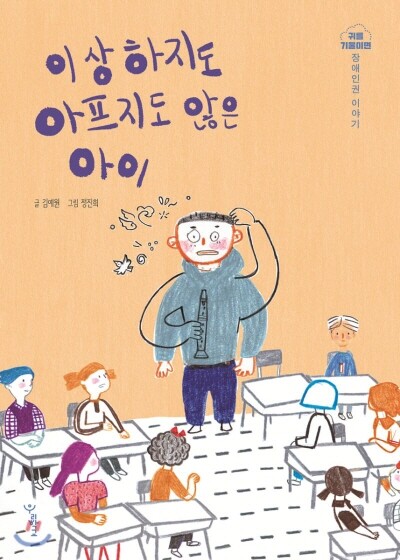
Kim Yewon’s children’s book begins in a fourth-grade classroom where Jo-han, a student with developmental disabilities, causes a small disturbance by taking and playing a classmate’s recorder. The classmates react with distancing remarks and pity, and the teacher challenges them with a simple but powerful homework question: “What does it mean to live together?” The story uses this familiar school setting to explore how easy it is to confine a person to limiting labels and how community spaces shape our responses to difference.

The author, Kim Yewon, is a visually impaired human-rights lawyer who works supporting victims of rights violations and advocating for legal reform. Drawing on her experience and earlier work that connected film and real disability stories, she intentionally wrote for children to encourage early, empathetic thinking about diversity. The book’s title—taken from a key scene where a child reveals their true self to a friend—captures the central message: people are not merely “strange” or “sick,” but individuals with distinct gifts, like flowers with different colors and scents.

The book challenges common paternalistic reactions—”poor thing,” “how difficult”—that shrink a person’s identity and instead invites small, practical changes in everyday behavior. Kim recommends simple acts of kindness and speaking up when needed, arguing that ordinary people’s small, consistent efforts have great power to change social norms. She also suggests empathy-building media such as Inside Out and urges readers to practice “gentle interventions” in daily life to help create a more inclusive community.


Original source: 김예원 “우리, 같이 살아간다는 것” | 예스24 채널예스 (Source: the news outlet; please refer to the original article.)

2018.05.14 19:26
Ahead of local elections, disability-rights lawyer Kim Ye-won argues a simple change — adding candidates’ photos to ballots, as Taiwan does — would make voting far easier for people with developmental disabilities. She criticizes the Public Official Election Act for omitting photos and laments that the same accessibility concerns resurface every election cycle without reform. Kim’s proposal highlights practical, low-cost adjustments that could significantly increase meaningful political participation for disabled voters.

Kim’s own story and work illustrate the stakes. Born with an eye injury, she built a legal career through merit, then founded the Disability Rights Law Center to provide free legal aid to people facing rights violations because of disability. Working with abused, abandoned, and exploited individuals, she documents how legal and institutional gaps — for example, no guaranteed state-appointed counsel in many disability abuse cases — leave vulnerable people without recourse. Her center operates with minimal resources yet addresses severe, long-standing injustices.

Rather than one-off charity or paternalistic “fix-it” approaches, Kim urges sustained, empowering assistance: trained supporters who provide information and accompaniment so disabled people can make their own decisions. She warns against treating disabled people as passive objects of protection and calls for systemic reforms and continuous local support to secure rights and dignity. Her message is both practical and moral: inclusive changes and steady help now protect everyone, because anyone can become vulnerable.


Original source: 장애인도 편하게 투표할 수 있는 날 기다려요 – 매일경제 (Source: the news outlet; please refer to the original article.)

2014.12.02 19:12 article
Recent reporting highlights that community-based disability rights advocacy in Korea is struggling to keep up with systemic problems. Local centers and organizations play a vital role—documenting abuses, supporting complaints, and raising public awareness—but face resource constraints, overlapping responsibilities, and legal blind spots that limit their effectiveness.

Practical issues underscore the problem: the government has moved to standardize the name of disability documents under a single “disability registration card,” but broader policy failures remain. Low employment rates (around 34%) and modest average monthly wages (approximately 2,153,000 KRW) reflect a poverty trap that undermines work incentives. High-profile discrimination cases, rising legal claims, and persistent human-rights violations show that advocacy alone can’t substitute for stronger legal protections and social supports.

Advocates are calling for urgent legislative and structural reforms — including passage of comprehensive disability-rights legislation and targeted laws such as support for people with brain lesions — alongside better funding, clearer mandates for local centers, and coordinated national oversight. Strengthening legal remedies, updating the Basic Livelihood Security framework, and improving service delivery are presented as immediate priorities to turn advocacy gains into durable rights and inclusion.


Original source: 지역밀착형 장애인권리옹호 서비스 ‘한계’ (Source: the news outlet; please refer to the original article.)