Tag

social inclusion

Browsing

2019.03.12
Kim Ye-won, a prominent disability rights lawyer and director of the Disability Rights Law Center, frames her new book as both a personal and political project. Drawing on years of public-interest legal work and a lifelong love of film, she argues that society’s treatment of disabled people reflects environmental and attitudinal failures rather than individual deficits. Her book collects film scenes as entry points to discuss how dignity, work, education and community life are denied or distorted for people with disabilities.

Rather than treating disability as something to be pitied or “overcome,” Kim reads movies with a critical eye, using familiar scenes—from comedic moments to quiet domestic dramas—to reveal structural barriers: inaccessible labor markets, exclusionary education, and the presumption that disabled people are helpless or a public burden. She purposely writes in an accessible tone to shift social perception before legal reform can be fully effective, believing that laws alone cannot close gaps created by deep-seated stereotypes.

Kim’s central message is pragmatic and urgent: change the environment and attitudes so disabled people can live with dignity, pursue work and hobbies, and participate fully in community life. She illustrates this with a personal anecdote about her young daughter learning pity toward a disabled person, showing how early social conditioning reinforces harmful frames. The book is a call to rethink what “normal” means and to build social, legal and cultural conditions that respect everyone’s equal worth.


Original source: 김예원 변호사 “장애인이 처한 환경은 내가 처하고 싶지 않은 환경” | 예스24 채널예스 (Source: the news outlet; please refer to the original article.)
2018-08-14 11:40:06
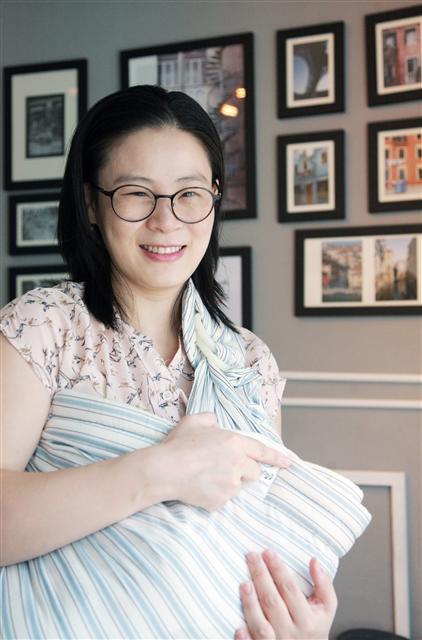
Kim Ye-won is a human-rights lawyer and disability-rights advocate who argues that separation, not lofty laws, drives discrimination. Drawing on her own experience of losing sight in one eye and attending mainstream schools, she emphasizes that true integration comes from everyday shared experiences—especially in early childhood education—rather than building more segregated institutions. She links this view to the broader principle that exclusion begins with separation, referencing historic desegregation precedents to stress why mixed environments matter for changing attitudes.

Professionally, Kim combined public-interest commitment with strategic legal advocacy. A graduate of the Judicial Research and Training Institute (class 41), she helped seed a public-interest legal fund with fellow trainees and worked at the Dongcheon foundation, the Seoul Disability Human Rights Center, and then founded the Disability Rights Law Center. Her legal wins include persuading the courts to treat a damaged prosthetic as a work-related injury, and she has been recognized with the Seoul welfare award and the inaugural Kwak Jeong-sook Human Rights Award for her work defending disabled workers, migrants and other marginalized groups.

Beyond courtroom victories, Kim highlights persistent practical barriers: classification systems that push students into special schools, long commutes to segregated facilities, and social isolation that leaves vulnerable people without everyday “ties” to others. She advocates for small, implementable changes—such as shared mealtimes and mixed classroom settings—to build empathy and connection from childhood. Balancing her legal work with being a mother of three, Kim stresses a pragmatic long-term commitment to remain in public-interest work and ensure laws are translated into lived inclusion.


Original source: [법조 이사람-김예원 변호사]“장애인 분리금지에도 현실은 따로성장 거창한 법보다 함께 교육받는게 중요” (Source: the news outlet; please refer to the original article.)