2022.06.20 09:25 Kim remains engaged on current disability issues—defending the rights of protest groups that press authorities to honor commitments—and balances advocacy with family life and professional development. Soon she will research victim support in the U.S. as a visiting scholar at Duke, and she is open to future public roles. Her advice to young lawyers is practical: follow your lived interests, start by looking and participating, and let steady engagement—not grand gestures—build meaningful change.
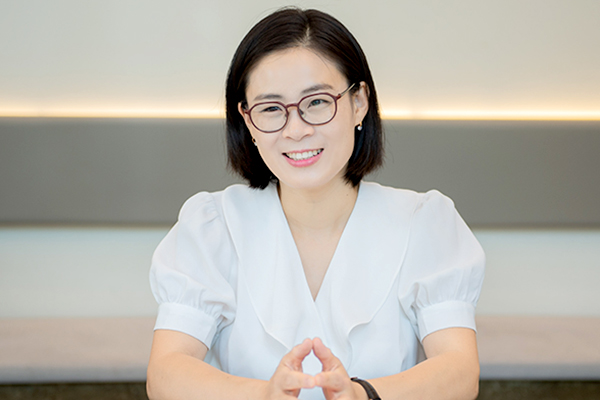
19.12.12 10:46 Kim Ye-won is a public-interest lawyer and founder of the Disability Rights Law Center who has dedicated her career to defending people with disabilities, especially those facing intersectional discrimination. After passing the bar in 2009 and working at the Dongcheon Foundation, she helped establish the center in 2017 to fill legal blind spots and challenge systemic injustices. Her work combines courtroom advocacy with ongoing support, and she finds deep professional satisfaction in using the law to address social wrongs.
Central to Kim’s approach is the power of solidarity: she routinely partners with disability, child and women’s organizations throughout litigation and in post‑case protection for clients. Rather than focusing solely on case outcomes, she measures success by the emotional and practical change in survivors—helping them move from fear and self-blame to feeling supported and valued. Kim emphasizes empathetic communication, reminding clients that their harm was not their fault and coordinating networks that sustain recovery beyond legal victory.
Beyond institutional alliances, Kim argues for everyday solidarity between disabled and non-disabled people, rejecting patronizing or objectifying attitudes and promoting mutual aid and genuine dialogue. She frames her advocacy as a natural fit for her personality—direct, persistent, and upbeat—and insists that simple respect and communication are the first steps toward inclusion. Her optimism and refusal to become pessimistic about cases reflect a broader belief that collective effort can produce meaningful change for marginalized communities.
Original source: ‘명랑’ 김예원 변호사가 말하는 “연대의 힘” (Source: the news outlet; please refer to the original article.)
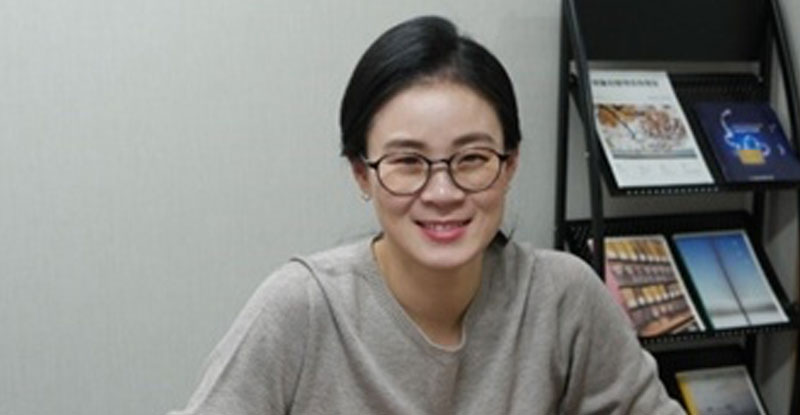
2019-01-31 06:00 Kim Ye‑won is a solo nonprofit lawyer who runs the Disability Rights Law Center in Seoul, dedicating her practice to people with developmental disabilities, disabled children and women who struggle to access legal help. Her work is visceral and public: she once removed her prosthetic eye in court to plead for the maximum sentence in a case where a five‑year‑old child was blinded, and she has represented clients under extremely constrained conditions through extensive pro bono work. The center operates on minimal resources — the Seoul Bar Association provided office space — and Kim combines strategic litigation with direct client advocacy to advance disability rights and accountability.
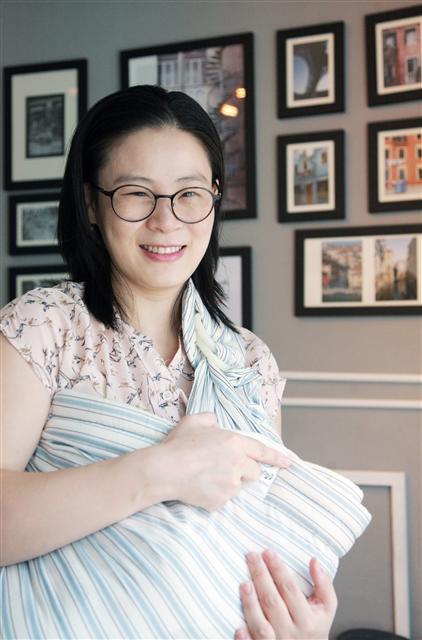
Her career is inseparable from motherhood. As a mother of three, she has brought infants into court when childcare was unavailable, famously breastfeeding a 50‑day‑old in the courtroom to avoid missing critical hearings. Kim candidly recounts regrets about placing her first child full‑time in daycare at 82 days and explains that as a self‑employed public interest lawyer she could not take extended leave for later children, forcing practical choices that many working mothers face. Her visible actions sparked strong reactions — surprise from judges, solidarity from fellow women lawyers, and public admiration that she treats as ordinary necessity rather than heroism.
Kim’s personal history shapes her commitment: she lost sight in one eye due to a medical accident, earned law school on full scholarship, and entered public interest work through experiences at Dongcheon and the Seoul Disability Human Rights Center before founding her own center in 2017. Supported by a like‑minded husband who is a judge, the couple regularly donates a portion of their income to charities; Kim channels the rest of her time into client work, household routines she calls a hobby, and relentless fieldwork that keeps her deeply engaged with clients’ lives. Her practice demonstrates a pragmatic, embodied approach to legal advocacy — one that melds lived experience, parental responsibility and tireless pro bono service to protect society’s most vulnerable.
2018-08-14 11:40:06 Kim Ye-won is a human-rights lawyer and disability-rights advocate who argues that separation, not lofty laws, drives discrimination. Drawing on her own experience of losing sight in one eye and attending mainstream schools, she emphasizes that true integration comes from everyday shared experiences—especially in early childhood education—rather than building more segregated institutions. She links this view to the broader principle that exclusion begins with separation, referencing historic desegregation precedents to stress why mixed environments matter for changing attitudes.
Professionally, Kim combined public-interest commitment with strategic legal advocacy. A graduate of the Judicial Research and Training Institute (class 41), she helped seed a public-interest legal fund with fellow trainees and worked at the Dongcheon foundation, the Seoul Disability Human Rights Center, and then founded the Disability Rights Law Center. Her legal wins include persuading the courts to treat a damaged prosthetic as a work-related injury, and she has been recognized with the Seoul welfare award and the inaugural Kwak Jeong-sook Human Rights Award for her work defending disabled workers, migrants and other marginalized groups.
Beyond courtroom victories, Kim highlights persistent practical barriers: classification systems that push students into special schools, long commutes to segregated facilities, and social isolation that leaves vulnerable people without everyday “ties” to others. She advocates for small, implementable changes—such as shared mealtimes and mixed classroom settings—to build empathy and connection from childhood. Balancing her legal work with being a mother of three, Kim stresses a pragmatic long-term commitment to remain in public-interest work and ensure laws are translated into lived inclusion.
2018.03.19 17:52 Kim Ye-won, a 36-year-old lawyer and founder of the Disability Rights Law Center, has been selected as the first recipient of the Kwak Jeong-sook Human Rights Award. The prize was created to honor the legacy of the late lawmaker and disability rights activist Kwak Jeong-sook, who lived with a spinal cord injury, led the Korean Women with Disabilities Union, and served as a proportional representative in the National Assembly for the Democratic Labor Party.
Kim’s legal career and advocacy work were cited in the selection. A graduate of Chuncheon High School and Gangwon National University Law School, she passed the bar in 2009 and worked at the Dongcheon public interest foundation affiliated with the law firm Bae, Kim & Lee. There she helped secure a landmark Supreme Court ruling recognizing that damage to a prosthetic leg used by a disabled worker can qualify as a work-related injury. Kim later worked at the Seoul Disability Rights Center and in 2017 established a nonprofit law office dedicated exclusively to representing victims of disability rights violations.
Responding to the award, Kim said she views it not as recognition of past work but as encouragement to continue. The award ceremony will be held on the 20th alongside a memorial event marking the second anniversary of Kwak Jeong-sook’s passing, in Gwangju’s Seo-gu at the Gwangju Citizen Media Center.
Anecdotes in the piece—like confronting a stranger in an elevator over an unreturned tumbler—illustrate how small, uncomfortable acts of calling out wrongdoing can nudge conscience and spur incremental social change. The author argues that while change is slow, individual moments of accountability create tiny ripples that may encourage people to reconsider selfish habits and unjust behaviors.
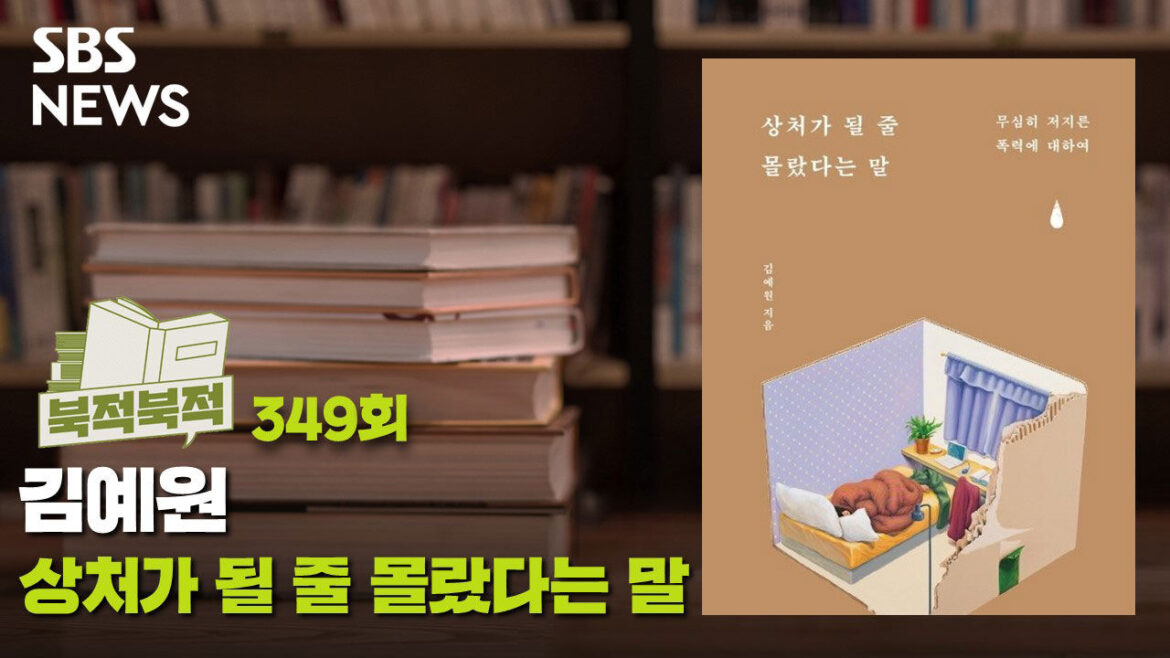
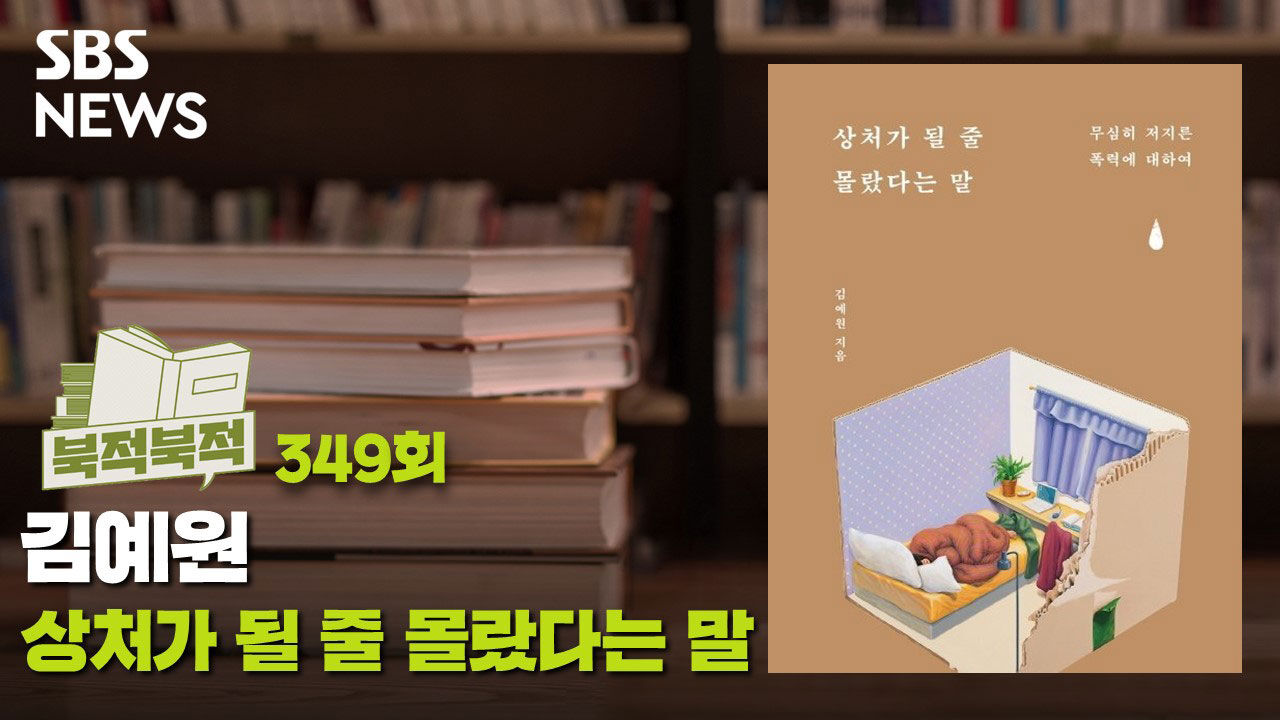
The essay centers on lawyer and activist Kim Ye-won and her book, which resonates with the popular drama Extraordinary Attorney Woo. As a visually impaired lawyer, a mother, and a defender of marginalized clients, Kim sees her legal work as helping people reclaim their identities and rights. She laments that while technology advances, social sensitivity to human rights often stagnates, and institutions keep applying uniform standards that ignore differences in disability, gender, race, and background.
Through courtroom stories, Kim exposes the darker sides of human rationalization—perpetrators who deny harm and systems that overlook vulnerable people. Yet she remains committed to the work, comparing civic conscience-raising to Socrates’ proverbial prod: small piercings that wake the larger social body. The central plea is simple and firm—things that are wrong must be named—and the book is offered as a reminder that everyday accountability and legal advocacy together help move society forward.
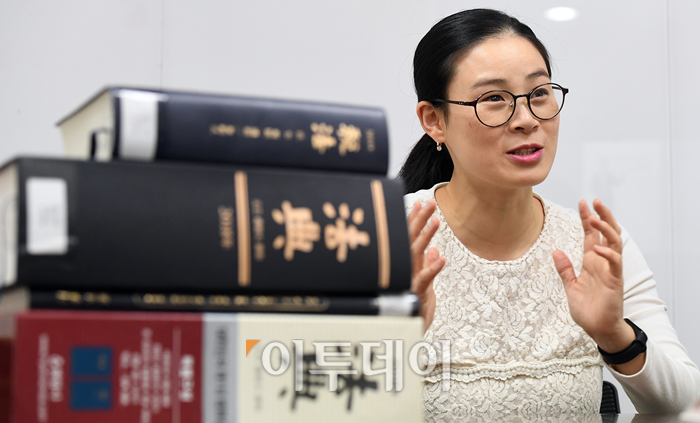
2022.10.29. 03:00 Kim Ye‑won is a visually impaired human-rights lawyer who has spent more than a decade providing pro bono legal aid to children, people with disabilities, and other marginalized victims of abuse. Born with a medical accident that cost her an eye, she turned personal injustice into public advocacy, handling roughly 1,000 cases and challenging institutional discrimination. Her work ranges from representing developmentally disabled victims of sexual and labor exploitation to campaigning for legislative change and researching victim support systems as a visiting scholar at Duke University.
Kim argues that focusing only on sensational child‑abuse cases or increasing statutory penalties does not solve the underlying problem. She highlights systemic failures: unclear roles and poor information‑sharing among police, local government, schools, and child protection agencies, as well as a practice of automatic family separation that often ignores the child’s wishes and can retraumatize victims. Kim warns that harsher maximum sentences can paradoxically reduce prosecutions by raising evidentiary thresholds, and she calls for stronger, child‑centered interventions—monitoring, support for victims, and measures to prevent parental reoffending—rather than reflexive criminalization.
Beyond litigation on child abuse, Kim has led long campaigns against discriminatory rules—most notably a seven‑year effort to change licensing laws so visually impaired drivers can renew Class 1 licenses—and continues to press for systemic reform. She emphasizes that abuse occurs across all socioeconomic groups and urges the public to report suspicions rather than assuming abuse is limited to the most visible cases. Her message: protect children by centering their voices, reform fragmented institutions, and address discrimination against people with disabilities as part of a broader justice agenda.
2017.04.13 13:52 Last January, attorney Kim Yewon opened the Disability Rights Law Center and marked its 100th day while running essentially a one‑person legal office. Despite earning just 200,000 won in the first month (mainly lecture fees from disability organizations), she handles intake calls, drafts opinions and filings, and makes frequent site visits. Kim plans to grow the operation into a nonprofit as like‑minded colleagues join, but for now she treats the Center as a professional commitment rather than charity.
Kim’s path to disability advocacy is personal and strategic. After losing sight in one eye because of a medical incident, she recognized how information asymmetry leaves vulnerable people without legal protection and resolved to become a lawyer. She rose from local university scholarship support to pass the bar and, during training, saw systemic harms while working with refugee, sexual‑assault and disability organizations. To support public interest work she organized a legal fund with classmates that raised roughly 360 million won over three years, enabling sustained pro bono representation.
Her work emphasizes empowerment over paternalism. Kim highlights a landmark win where she helped a security guard whose prosthetic leg was damaged in a workplace accident, overturning a court ruling that denied industrial accident status. She has earned counseling and social‑work credentials to better serve disabled survivors of sexual violence, balances demanding public interest work with parenting two young children, and donates regularly with her husband. Kim frames her choices as both professional and personally fulfilling — a deliberate, joy‑driven vocation rather than mere volunteerism.
Kim Ye-won has been named the inaugural recipient of the Kwak Jeong-suk Human Rights Award, established to honor the late activist and former lawmaker who devoted her life to disability rights. The award committee recognized Kim for her tireless legal support in disability rights cases. Though born with a medical accident that cost her vision in one eye, Kim says she did not set out to be a disability-rights lawyer; her path shifted after handling disability-rights cases at a public-interest foundation and later at the Seoul Disability Rights Center.
Her career includes a landmark 2014 Supreme Court victory that recognized damage to a prosthetic leg as an occupational injury, and years of public-interest work defending invisible and systemic discrimination. In 2017 she founded the nonprofit Disability Rights Law Center, providing free legal services and refusing fees and donations to prioritize clients who might otherwise remain unheard. Kim has taken on difficult cases—from long-term labor exploitation where courts sometimes award minimal compensation, to the underreported sexual violence faced by disabled women—and consistently emphasizes that disability rights encompass more than mobility: they include information access, cultural participation, and full civic equality.
Known for describing herself as someone whose “personality became her profession,” Kim pursues justice by asking difficult questions and empowering clients to reclaim their voices. She finds reward not only in legal wins but in witnessing survivors grow stronger and recognize they are not to blame. A mother expecting her third child and still actively providing legal support in late pregnancy, Kim frames the award as encouragement to continue steady, long-term work rather than as an endpoint: she hopes simply to keep doing this work for years to come.
Original source: 장애인 인권 위한 그녀의 소걸음 (Source: the news outlet; please refer to the original article.)
Kim Ye-won, a 31-year-old attorney with the Dongcheon public-interest foundation of law firm Taepyungyang, has become a prominent and relentless advocate for people with disabilities. Known for warm empathy with victims and fierce advocacy in court, she is leading appeals and civil claims in high-profile abuse cases, including the Wonju disability-facility scandal where a man who posed as a pastor abused and exploited dozens of residents. Kim criticizes the initial sentence as too lenient, is representing victims in family-registration corrections and related suits, and works closely with rescued residents as they recover from long-term trauma.
Her drive to become a lawyer came from personal experience: she lost sight in one eye due to a birth-related medical accident and was shocked by the lack of redress and apology. That experience shaped her focus on medical negligence and structural discrimination. Kim recounts everyday barriers she’s faced, such as being denied a license upgrade because of one-eye vision rules, and organized advocacy that helped prompt a legislative proposal to allow individualized assessments for licensing. She emphasizes practical reforms over blanket restrictions, citing international precedents that permit driving with one good eye under evaluation.
Beyond individual cases, Kim is pushing systemic change: she champions a Protection & Advocacy (P&A) model to enable rapid, local intervention in abuse or rights violations, and contributes to civil society reporting ahead of Korea’s UN CRPD review. She views the law as a tool to create faster, safer social change and argues disability rights are everyone’s issue—because anyone can become disabled and society benefits when all members are protected and included.